On this page
Choose what the operator needs to control
A finger-level task needs more than a moving hand model. Identify which fingers matter, where contact should be measured and whether the wearer needs a vibration or resistance cue.
Track the movement
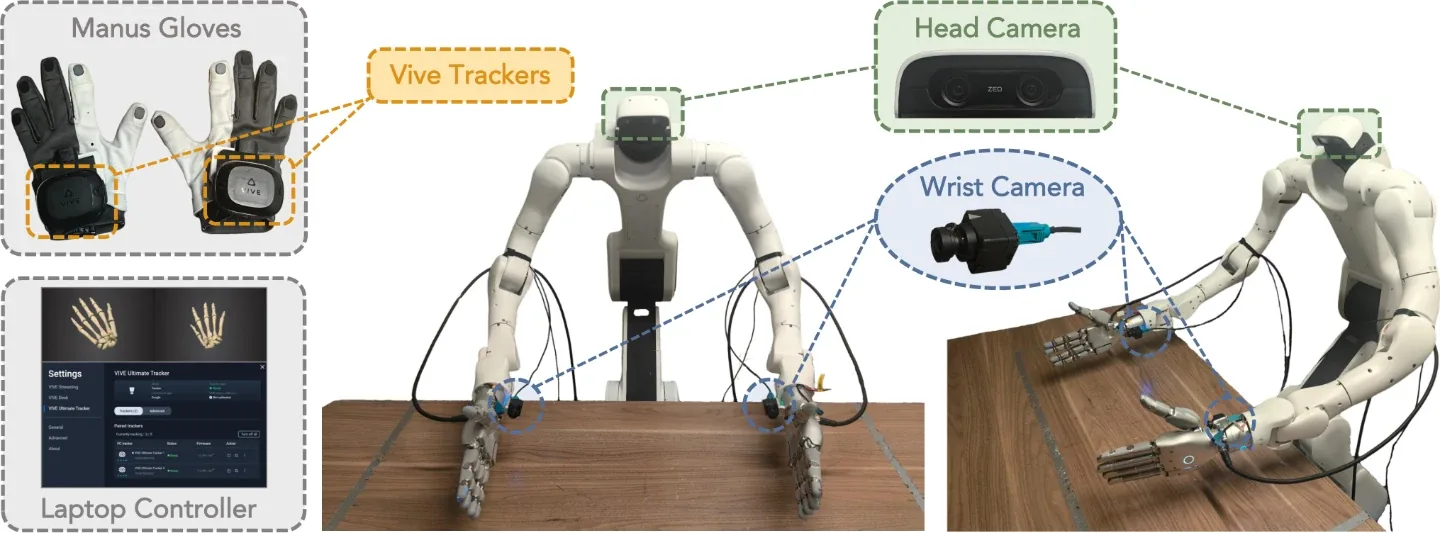
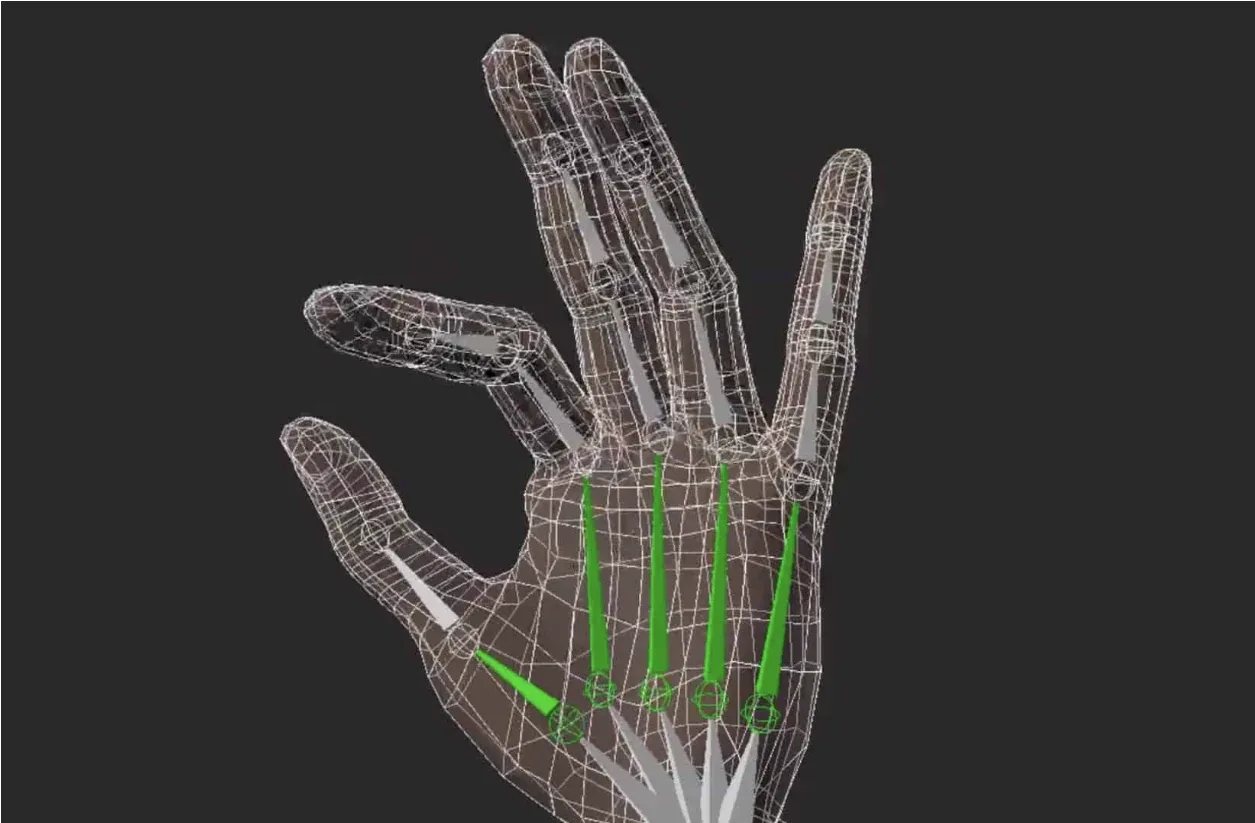
Capture hand pose and turn it into the target hand’s commands.
Understand the interaction
Measure contact signals, or send cues back to the wearer. A pressure sensor measures; an actuator delivers feedback.
Fit the glove and check the mapping
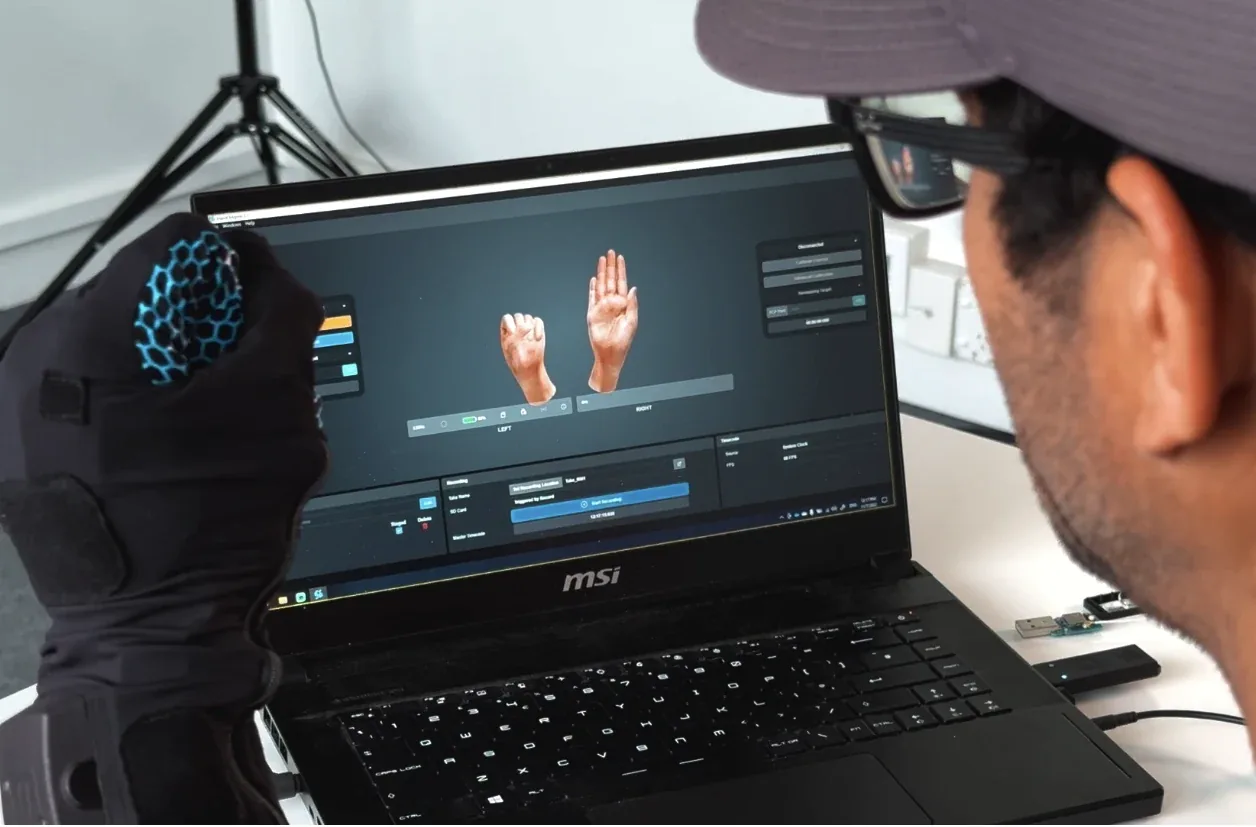
Record a comfortable open hand, a relaxed bend and the movements used in the task. Compare each finger with the live hand model, then check the mapped robot joints within the selected operating envelope.
- Review wearer fit and sensor placement.
- Check the meaning of each angle, pressure channel and reference frame.
- Repeat the same motion and look for slippage or inconsistent mapping.
Keep motion and contact together
Use a short sequence with visible events: approach, first contact, hold and release. Keep input timestamps, target commands, measured signals and video references in the recording so an unexpected grasp can be traced.
- Approach
- Contact
- Hold
- Release
Use research to frame the next experiment
Reis Carneiro and colleagues describe a tailored textile glove using printed strain and pressure sensors for robot interaction. Cerro and colleagues study a sensory glove that combines acoustic and motion signals with machine learning for assembly checks. These examples suggest useful questions about fit, signal choice and task events.
- Which signal changes at the event you want to capture?
- Does garment fit change the repeatability of that signal?
- Can you review the raw input alongside the task result?